Posts

No-win, no-fee and business rates

Image
Very quick blog for the benefit of David Gauke, MP who happens to be chief secretary to the Treasury. He is introducing business rate changes that will see rates rise for just over half a million businesses from April. He is facing a barrage of criticism from various directions. I instinctively feel that business is quite heavily taxed at the moment and increasing the tax burden on small businesses at such an uncertain time is a terrible idea. But, I also recognise that I don’t really know much beyond what happens in my own business so I won’t try to argue whether the rate changes are a good or bad thing What I do want to discuss is his comments about steps being taken to clamp down on people bringing challenges to the rates they are asked to pay in the hope of reducing the cost to their business.   Mr Gauke seems to place the blame for too many challenges at the door of the surveyors and lawyers (aren’t we always to blame… well until you need us) encouraging bu...

Has Paul Nuttall of UKIP broken election law?

Image
Nuttall criticised for his living arrangements but not for that awful outfit Over the past few days, UKIP leader and Swindon by-election candidate, Paul Nuttall has faced criticism for giving his home address, on the Home Address form that is part of the nomination pack for prospective political candidate, as one where he does not live. Mr Nuttall answers these criticisms by saying that he gave the address because he has rented the house and intends to move into it for the duration of the election campaign. Journalists, most notably Michael Crick, have been forthright in their claims that Mr Nuttall broke the law and could face prison for making a false declaration. So, what is the truth? Michael Crick on Paul Nuttall Prospective candidates must register their nomination with the returning officer by providing certain information. The required information is set out in paragraph 6 of schedule 1 to the Representation of the People Act 1983. All of the required ...

The court that likes to say, “no”

Image
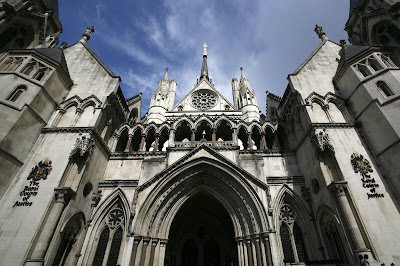
Royal Courts of Justice - home of the Court of Appeal Friday last saw the publication of judgment by the Court of Appeal Criminal Division (CACD) in the case of R v Ordu. In 2007, Mr Ordu entered the UK via Germany using a false passport. He was prosecuted under the now defunct Identity Cards Act 2006 for possessing false identity documents with intent. Section 31 of the Immigration and Asylum Act 1999 was in force at the time (and indeed is still in force, although it has been amended); it creates a defence for refugees fleeing persecution. It was supposed to bring the law into compliance with the UK’s treaty obligations arising from the Refugee Convention. Section 31 was badly drafted because it barred people who had stopped over in another safe country on their way to the UK from relying on the defence; however, the Convention specifically required the UK (and other signatories) to extend the defence to such people. Despite this glaring conflict the law at the time ...

A day in the youth court

Image
The Criminal Justice System is not the place for vulnerable kids Today I took a break from my usual diet of drink driving  to covered a stint as youth court duty solicitor for someone who couldn’t make it. I haven’t been a youth court duty for quite a long time but it wasn’t too bad. I arrived bright and early at 9.30am ready to collect my papers for the day and get to work. But, there were no papers and nobody in need of representation. I found a room, did some work until lunch time then sat back with a couple of episodes of the X Files for an hour and a half (thank you Amazon Prime). Just as the second episode ended (it was the one with the secretary whose boss was murdered and who is now protecting her from terrorists and his former business partner from beyond the grave) I got a call telling me that there was, at last, somebody for me to see. Dashing up to the CPS room, I collected the papers and then ran to the cells to see my new client. It’s ages since I’ve ...

The importance of expert legal advice

Image
Expert legal advice is essential any time you are interviewed by police I met a new client last week. He is accused of drink driving and contacted me after hearing of me through others I've represented . He was arrested at home where the police found him in bed… asleep. He was not the only person in the house and was not the only person with access to the car he was accused of driving. Having considered the evidence, I saw that the police received call from an “unknown informant” saying that somebody was drink driving. No reason for this belief was given nor was there any description of the driver. In short, there was no evidence that the man charged with the offence was the driver. Since the prosecution must prove not only that a person is over the drink driving limit but also that he drove while over the limit, evidence identifying the driver is very important. At the police station, my client was interviewed in the presence of the duty solicitor – or at least ...

To speak, or not to speak: that is the question

Image
To answer or not to answer questions is a difficult decision This post was published in 2016 and is out of date. You can read an updated version of this post about whether a suspect should answer questions in a police interview or not by visiting  https://www.londondrinkdrivingsolicitor.co.uk/-Police-questioning-to-answer-or-not-to-answer  

Let unqualified law graduates defence the poor says judge

Image
Sir Terence Etherton, Master of the Rolls If you don’t know, the Master of the Rolls is a senior judge, in fact it is the second most senior judge in England and Wales. Before becoming Master of the Rolls any office holder will have had a career as either a barrister or solicitor (though let’s be honest there’s not been a solicitor appointed to the role so far but the office has only existed since the 2 nd September 1286 so there’s not been much time to appoint a non-barrister I suppose). The current incumbent is Sir Terence Etherton who has completed almost two months in post and is already proposing the sort of dotty ideas that are best left to politicians. There seems little doubt that the British justice system is, to use a technical legal term that you may not all understand, fucked. There has been years of under investment by successive governments in every possible area from the buildings through the judges and down to the lawyers that appear before them. The buil...