Posts

Showing posts with the label solicitors

Drink driving

Image
  Drink driving law is more complex than many appreciate One thing I have found since specialising in motoring law is that it is an area that is poorly understood by many people, criminal lawyers and judges included. I have heard comments from fellow solicitors that include, “I don’t need any papers to advise him about his case, it’s only drink driving.” And, “there are no defences to drink driving.” Most worryingly I’ve heard more than one court legal adviser tell their magistrates that “it is impossible to avoid a driving ban following a drink driving conviction.” None of these things are true and I hope, through a series of blog posts, to give a brief glimpse into the law of motor vehicles and alcohol. In this first post I think it’s worth spelling out exactly what drink driving is and what needs to be proven to secure a conviction. The first thing to know is that there are two different types of drink driving and they require the prosecution to pro...

Challenging forensic evidence is crucial in criminal trials

Image
As police investigate forensic experts it is ever more important to challenge scientific evidence   You may, or may not, know that I specialise in motoring law and that my practice has a particular emphasis on drink driving, drug driving and the associated offences . Because these offences usually require some scientific enquiry to be conducted to prove guilt, they frequently include forensic evidence and today I want to look at how courts deal with forensic evidence and challenges to it. Let’s assume that somebody has been arrested for drink driving and, for whatever reason, the police have taken blood to assess how much alcohol is in his body. The prosecution will usually provide a document called an SFR1, which is a summary of the scientific examiner’s findings. It is not a document that is admissible itself, although it can be admitted if all parties agree. If a party does not agree to the summary being admitted then the prosecution ask the expert to produce an SFR2...

Guilty until proven innocent?

Image
Behind this doors: trials defendants are excluded from attending A couple of years ago the government introduced a new system of bringing prosecutions in the magistrates’ court, called the Single Justice Procedure Notice (SJPN). This procedure allows the police to initiate prosecutions more speedily than under the old system and effectively allows trials to be held in which the defendant is almost deemed guilty from the start. It can only be used for non-imprisonable offences but that can include a surprising range of allegations, e.g. it was recently used to prosecute an HGV driver alleged to have knocked down a cyclist. This new procedure arises from an amendment made to section 29 of the Criminal Justice Act 2003 that allows for criminal proceedings to be instituted by the service of a written charge. Where a written charge is issued the prosecutor must at the same time issue either a requisition or a Single Justice Procedure Notice, which is a document that requires ...

Why do two people get different sentences for the same offence?

Image
Mitigation can significantly reduce a drink driving sentence There is a, very minor, story in today’s Daily Mail about a businessman sentenced for drink driving that has led to quite a few people asking why he received a fine of £488 (actually, he was fined £367 but the Mail got that bit wrong) and a 14-month driving ban while Chris Tarrant was fined £6,000 and handed a 12-month ban for the same offence , even though Mr Tarrant had a much lower alcohol level.  As I acted for the businessman, I’m tempted to say that the difference must reflect the fact that one had a specialist drink driving solicitor while the other was represented by a corporate crime expert, although I’m sure that the truth is that the law on sentencing came into play. So, since people are speculating about the differences in sentence I though we might as well take a moment to look at how people are sentenced by criminal courts. We’ll use drink driving as an example, but the principles apply to all c...

The statutory warning

Image
Knowing the law is vital to defending yourself in court The statutory warning sounds like something impossibly dull – any maybe it is if you’re not a lawyer – but it is something that is very important in drink driving cases. When the police suspect somebody of drink driving they must take a specimen of breath, blood or urine from them that can be analysed to show whether the person was over or under the drink driving limit at the time they drove. Parliament has laid down strict rules about what must happen prior to the police requiring that a person suspected of drink driving provides a specimen for analysis. Section 7 of the Road Traffic Act 1988 gives the police the power to require a person to provide a specimen and tells us that the person commits an offence if he or she fails or refuses to do without reasonable excuse. However, section 7(7) says that: “A constable must, on requiring any person to provide a specimen in pursuance of this section, warn him that a f...

Should you rely on a home breathalyser?

Image
How long will a pint stay in your system? Unless you check you do not know I’ve been prompted to write this post following a Periscope broadcast by @SgtTCS about drink driving and the use of home breath test kits. SgtTCS is a serving police sergeant whom I have followed on Twitter for many years. He is extremely dedicated to his work and to promoting road safety. He has used social media to campaign against all sorts of dangers that motorists encounter on the roads. This is his tweet with a link to the Periscope broadcast: Personal breathalysers - #31DaysLive Day 78 suggested by @jred196   https://t.co/ityxGz0cTJ — SgtTCS (@SgtTCS) October 17, 2017 First, I should say that I do not disagree with the points SgtTCS makes but, having spent many years representing drink drivers , I do feel that he, and many other police officers, underestimate the importance of breath test devices in helping people avoid drink driving. The argument from many seems to be th...

Section 172 notices

Image
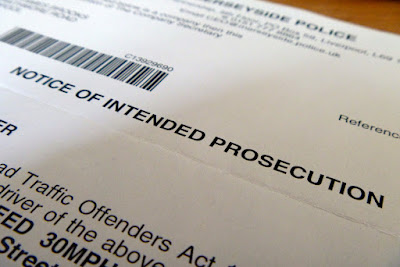
A short post on section 172 notices this afternoon. I tend to focus on drink driving offences, although I do undertake any type of motoring law case if asked, so section 172 notices pop up from time to time in my work. If you don’t already know, section 172 of the Road Traffic Act 1988 requires the registered keeper of a vehicle to identify the driver of the vehicle when the police allege that the driver at the time was responsible for an offence. If you’ve ever had a speeding ticket through the post then you will probably have been sent one of these documents sent out with the Notice of Intended Prosecution. Failing to provide the information is an offence in itself that carried a fine and six penalty points. There are technical legal defences but the most common defence I’ve seen is people giving evidence that they did return the form but it got lost somewhere along the line. In general, when a person gives evidence that they posted the section 172 notice having comple...

Wayne Rooney in court for drink driving

Image
Wayne Rooney On the 1 st September 2017, Everton and England international footballer Wayne Rooney was stopped by police as he drove his car through Wilmslow, Cheshire in the early hours of the morning. The police said that there was a light out on the car Mr Rooney was driving so they decided to stop it – presumably on the basis that people who have committed more serious offences often commit minor ones like having a light out on their cars. They found Mr Rooney in the driving seat with a lady in the front passenger seat. The police officers asked him to provide a specimen of breath to establish whether he was fit to drive or not. I haven’t seen a report saying why they did this but as section 6 of the Road Traffic Act 1988 only allows a specimen to be required where a constable reasonably suspects that a person has been driving with alcohol or drugs in their system we can assume that something about Mr Rooney made them suspect he was drunk. Typically, police are on...

The importance of expert legal advice

Image
Expert legal advice is essential any time you are interviewed by police I met a new client last week. He is accused of drink driving and contacted me after hearing of me through others I've represented . He was arrested at home where the police found him in bed… asleep. He was not the only person in the house and was not the only person with access to the car he was accused of driving. Having considered the evidence, I saw that the police received call from an “unknown informant” saying that somebody was drink driving. No reason for this belief was given nor was there any description of the driver. In short, there was no evidence that the man charged with the offence was the driver. Since the prosecution must prove not only that a person is over the drink driving limit but also that he drove while over the limit, evidence identifying the driver is very important. At the police station, my client was interviewed in the presence of the duty solicitor – or at least ...

Let unqualified law graduates defence the poor says judge

Image
Sir Terence Etherton, Master of the Rolls If you don’t know, the Master of the Rolls is a senior judge, in fact it is the second most senior judge in England and Wales. Before becoming Master of the Rolls any office holder will have had a career as either a barrister or solicitor (though let’s be honest there’s not been a solicitor appointed to the role so far but the office has only existed since the 2 nd September 1286 so there’s not been much time to appoint a non-barrister I suppose). The current incumbent is Sir Terence Etherton who has completed almost two months in post and is already proposing the sort of dotty ideas that are best left to politicians. There seems little doubt that the British justice system is, to use a technical legal term that you may not all understand, fucked. There has been years of under investment by successive governments in every possible area from the buildings through the judges and down to the lawyers that appear before them. The buil...

Drink driving in UK versus Norway: Drink driving limits

Image
Drink driving limits vary not only between countries but also between the various parts of the UK In part 3 of this four-part series comparing the drink driving law in Norway with that here in the UK following the driving conviction of Halfords finance director, Jonny Mason, we turn our attention to the question of the drink driving limit. In other words, how much alcohol can you have in your system and still be allowed to drive? In Part 1 we looked at whether a golf buggy could be a motor vehicle here in the UK and concluded that it could not unless it was modified. In Part 2 we considered whether a person could commit a drink driving offence on a private golf resort and concluded that while it is possible, it seems unlikely that drink driving on this resort (if it were in the UK) would be a crime. Now, we ask whether Mr Mason would have committed a crime if he had driven a car on a road with the amount of alcohol in his system that he had in Norway. Throughou...

Giving evidence at court

Image
How you give evidence is every bit as important as what you say Giving evidence can be a daunting experience for many people and even those who are used to public speaking can find the formality of a courtroom off-putting.  In this post, I hope to give you a better idea of what will happen when you go into court and how you can maximise the impact of your evidence. Procedure Whether you are a witness for the defence or prosecution the process of giving evidence is the same.  Just remember that unless you are the defendant you must wait outside the courtroom before you give your evidence unless the court has agreed you can enter the room sooner. Being sworn in First, you will be called into the courtroom by a member of the court staff who will direct you to the witness box.  You will be asked whether you have any religious beliefs.  If you do then you will be handed the appropriate religious book along with an oath for you to read.  If you are not ...